
Blake Franke · 9 October 2026
Voter Sentiment Patterns Connect Education Funding Proposals to Post-Policy Poll Adjustments
Recent trade adjustments and tax modifications implemented earlier in 2026 have coincided with measurable shifts in voter preferences around education investments, and data from multiple tracking organizations shows how these economic changes intersect with support levels for classroom-related legislative proposals. One such measure, often referred to as Nolan's Education Amendment, has appeared in polling questions across several states during the fall cycle, where respondents weighed classroom resource allocations against broader fiscal recalibrations.
Trade and Tax Adjustments Set the Context
Policy revisions to import tariffs on certain manufacturing inputs took effect in the second quarter of 2026, while corporate tax rate modifications expanded deductions for workforce training programs. Government statistical releases indicate these steps altered revenue projections at both federal and state levels, prompting analysts to examine downstream effects on public spending categories like K-12 infrastructure. Observers tracking state-level budget forecasts noted that districts in manufacturing-heavy regions reported revised revenue estimates within weeks of the adjustments.
Polling organizations began incorporating questions about education amendments into surveys by late summer, and figures from October 2026 cycles reveal modest upticks in support among households with school-age children. Those surveys segmented responses by income brackets affected by the tax changes, showing clearer differentiation in answers from middle-income groups compared with earlier quarters.
Linking Amendment Details to Poll Movements
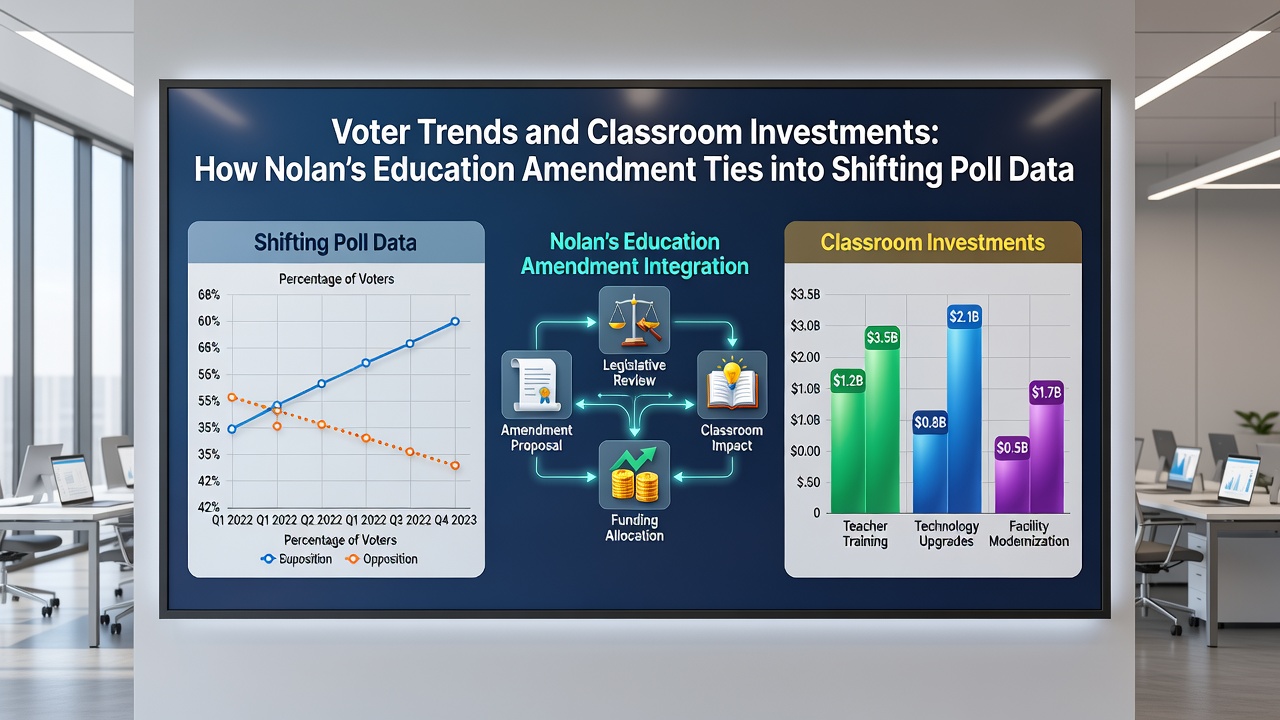
The amendment language centers on directing a portion of adjusted tax receipts toward classroom technology upgrades and teacher professional development grants. When pollsters presented paired questions about the trade policy outcomes and the education provisions, cross-tabulated results indicated respondents who reported direct impacts from tariff shifts also expressed higher conditional support for the classroom measures. Researchers at nonpartisan data centers compiled these patterns across multiple state samples, highlighting correlations rather than direct causation.
Demographic breakdowns in the October data further illustrated that suburban respondents tracked larger movements in favor of the amendment language than rural or urban cohorts. Analysts attributed part of the variance to localized school funding formulas that interact with state revenue streams altered by the tax adjustments. Educational attainment levels among respondents also aligned with differing response rates, as households with college graduates showed steadier support across the surveyed period.
Regional Variations in October 2026 Data
State-specific tracking in the Midwest and Southeast displayed distinct trajectories. In districts where trade-dependent employers announced workforce expansions following the tariff revisions, poll margins for the education amendment widened by several points between September and October. Conversely, areas experiencing slower adaptation to the tax deduction changes registered flatter or slightly declining support lines.
Academic researchers compiling multi-state datasets have pointed to the role of local property tax overlays in mediating these trends. Because some states tie supplemental classroom funding to property assessments that respond indirectly to corporate tax policy, the amendment's proposed reallocation mechanism gained visibility in public discussion during the same window. Election administration offices in several jurisdictions reported increased requests for detailed fiscal impact summaries related to the measure.
Data Sources and Measurement Approaches
Survey instruments from organizations such as the Pew Research Center incorporated modules on both economic policy effects and education priorities, allowing direct comparison of response shifts. Parallel efforts by the OECD education indicators program provided international benchmarks that contextualized U.S. state-level movements against broader patterns in public investment priorities. These sources supplied the underlying metrics referenced in state legislative briefings throughout the fall.
Conclusion
October 2026 polling snapshots demonstrate measurable intersections between post-adjustment economic indicators and voter considerations around classroom investment proposals. The patterns documented across multiple data collections show how trade and tax modifications have factored into segmented responses on education funding amendments without establishing unidirectional influence. Continued tracking through the remainder of the year will supply additional data points for evaluating the durability of these alignments across different demographic and regional cohorts.