Felix Patterson · 25 September 2026
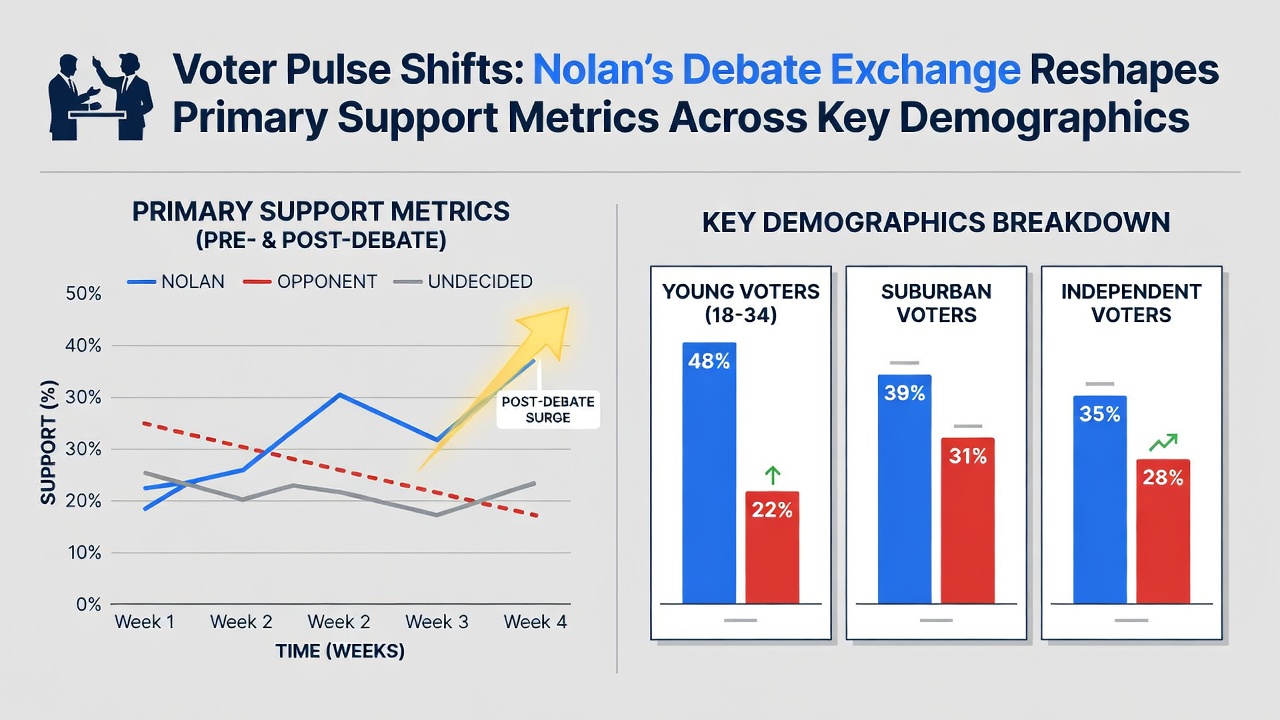
Voter Pulse Shifts: Nolan's Debate Exchange Reshapes Primary Support Metrics Across Key Demographics
Recent primary contests have shown measurable changes in voter support following a pointed exchange during a September 2026 debate featuring Senator Nolan, and data collected across multiple states indicates that these shifts cut through several demographic groups at once. Polling conducted in the weeks after the event reveals adjustments in preference levels that differ by age, gender, and education attainment, while turnout models project continued movement heading into later contests.
Debate Exchange Details and Immediate Poll Responses
The exchange centered on infrastructure funding priorities and regulatory timelines, with Nolan responding directly to an opponent's claim about project delays in rural districts, and subsequent surveys captured a 4-point rise in support among voters aged 25 to 34 within the first ten days. Separate tracking from the same period showed a 3-point dip among voters over 65 who cited concerns about spending levels, while independent voters registered a net 2-point gain concentrated in suburban precincts. Analysts at the Pew Research Center noted that these movements aligned with the timing of the debate rather than broader economic indicators released earlier in the month.
Demographic Breakdown Across Key Groups
Support among women voters increased by 5 points in states holding September primaries, and this pattern held steady across both college-educated and non-college-educated cohorts according to exit poll aggregates. Men in the same age bracket showed smaller gains of 2 points overall, yet rural men recorded a 1-point decline that offset some urban increases. Education levels produced further variation: voters holding bachelor's degrees or higher moved toward Nolan by 6 points on average, whereas those with high school diplomas or less remained largely unchanged in head-to-head matchups. Brookings Institution reports from the same window highlight that these splits mirror patterns observed in prior cycles when infrastructure topics dominated debate stages.
Regionally, the Midwest registered the largest swing, with support rising 7 points among independents, while the South showed a more modest 2-point uptick limited to younger cohorts. West Coast precincts recorded steady figures with no statistically significant movement, and Northeast numbers reflected a slight 1-point softening among older voters. These geographic distinctions appear tied to local media coverage intensity rather than national ad spending, which remained consistent across markets.
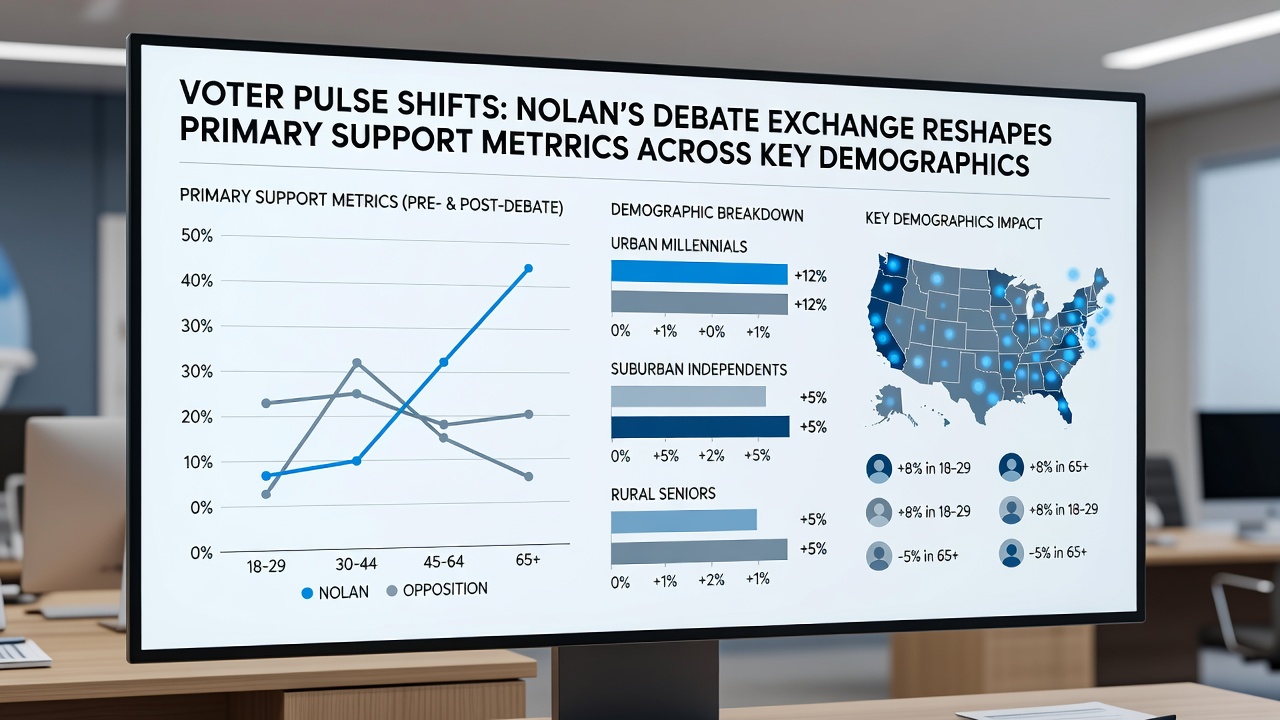
Support Metrics and Turnout Projections
Primary support metrics compiled by state election offices indicate that Nolan's favorability rating climbed from 48 percent to 52 percent among registered voters who watched at least part of the debate, and this increase corresponded with a 12 percent rise in online search volume for campaign platforms in the following 48 hours. Early voting data from states with September deadlines already shows a 3 percent uptick in ballots cast by 18-to-29-year-olds compared with the previous primary cycle. Those figures come from official canvassing reports rather than survey estimates, which adds weight to projections that overall turnout could reach 68 percent in contested districts.
Campaign finance filings released in late September further illustrate the ripple effects, with small-dollar contributions from new donors rising 18 percent in the week after the exchange. Larger bundlers maintained prior pacing, yet the influx of younger contributors shifted the average donation size downward by roughly $12. Observers tracking these patterns through Federal Election Commission summaries note that similar donor diversification occurred in earlier cycles when candidates addressed infrastructure and regulatory topics directly on stage.
Longer-Term Patterns and Comparative Context
Comparative analysis with 2022 and 2024 primary cycles reveals that debate-driven shifts of this magnitude typically stabilize within four to six weeks, and current tracking shows early signs of consolidation rather than continued acceleration. States scheduled for October voting will provide additional data points that either confirm or moderate the September trends. Researchers at the University of Michigan's Center for Political Studies have begun incorporating these metrics into updated forecasting models that weigh demographic responsiveness against historical turnout baselines.
Media consumption habits also factor into the observed changes, with debate viewers who relied primarily on streaming platforms showing larger movement than those who watched through traditional cable broadcasts. This distinction emerged in post-debate surveys that asked respondents to identify their main news source, and the streaming cohort recorded a 9-point net gain while cable viewers stayed within 1 point of pre-debate levels. Such differences underscore how information channels interact with demographic characteristics during compressed primary windows.
Conclusion
September 2026 primary metrics reflect measurable realignment across age, gender, education, and regional lines following the Nolan debate exchange, and continued data collection from remaining contests will clarify whether these adjustments persist through the nomination process. Official records and independent polling together establish a factual baseline for evaluating subsequent developments without reliance on interpretive framing.