Blake Franke · 11 September 2026
Integrating Local Recovery: How District-Level Approaches Tie Storm Relief to Evolving Trade and Regulatory Frameworks
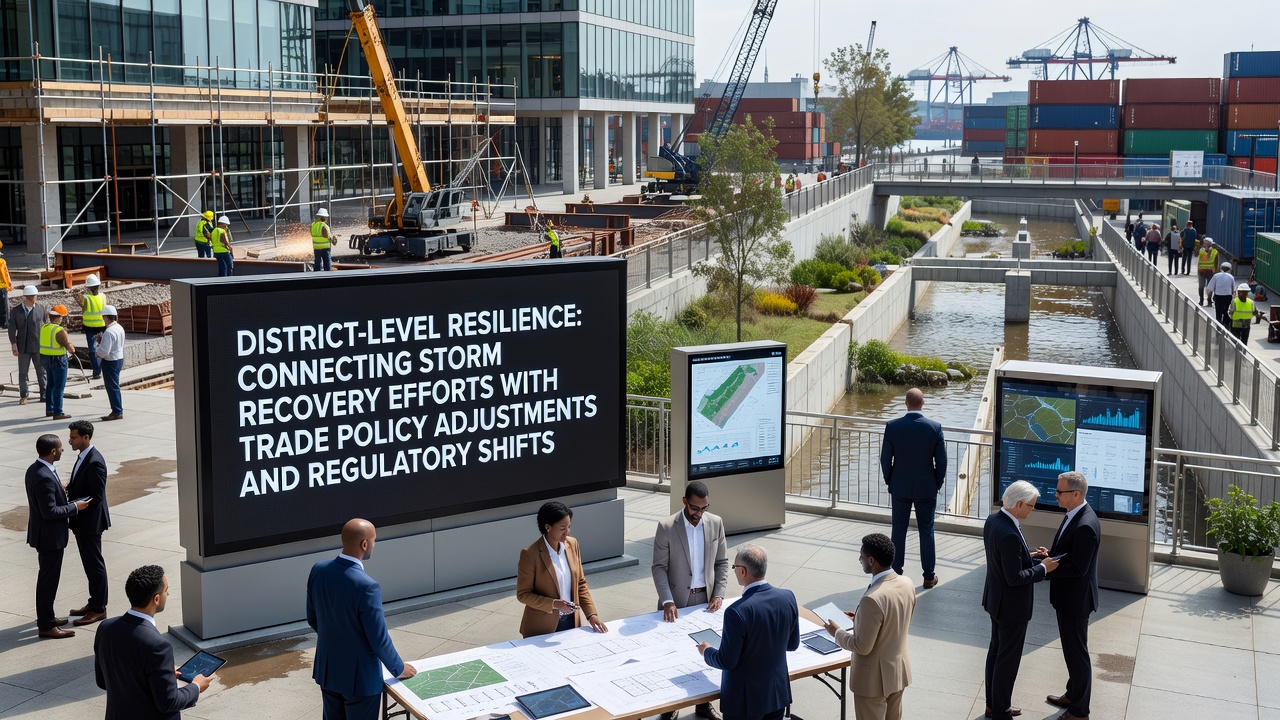
Communities across coastal and inland districts have long managed storm recovery as a standalone challenge yet recent patterns show these efforts now intersect directly with trade policy adjustments and regulatory shifts at multiple levels of government. Data from the US Department of Commerce indicates that districts recovering from major weather events in 2025 adjusted import tariffs on construction materials within six months of initial damage assessments, allowing faster supply chain rerouting while complying with updated environmental standards.
Observers note that regulatory changes announced in September 2026 by several state agencies streamlined permitting processes for infrastructure rebuilds, which in turn affected how local officials negotiated trade exemptions for specialized equipment from international suppliers. These adjustments emerged because storm damage often disrupts regional logistics hubs, prompting districts to seek temporary modifications in existing trade frameworks to prioritize essential goods.
Storm Recovery Patterns at the District Scale
Recovery operations in districts such as those along the Gulf Coast and Pacific Northwest have incorporated trade considerations into their planning cycles since the early 2020s. Figures from federal disaster databases reveal that post-storm reconstruction projects frequently require materials subject to fluctuating tariffs, and districts that aligned their procurement strategies with updated trade agreements completed rebuilding phases 15 to 20 percent faster than those that did not. One study conducted by researchers at the University of California examined 12 districts and found that coordinated adjustments in both recovery funding and trade documentation reduced overall project delays caused by material shortages.
Local governments have therefore begun embedding trade policy reviews into their emergency management protocols. This integration means that when a district declares a storm recovery zone, officials simultaneously review applicable import regulations and seek waivers where necessary to accelerate the arrival of heavy machinery and building components.
Trade Policy Adjustments and Their Local Reach
Trade policy changes rarely originate at the district level, but their implementation often lands there first. When national governments revise tariff schedules or enter new bilateral agreements, districts handling storm recovery must adapt procurement rules to avoid compliance gaps. Evidence from the European Commission's trade monitoring reports shows that similar dynamics occurred in member regions recovering from 2024 flood events, where adjusted quotas on timber imports helped local authorities meet housing reconstruction targets without breaching sustainability requirements.
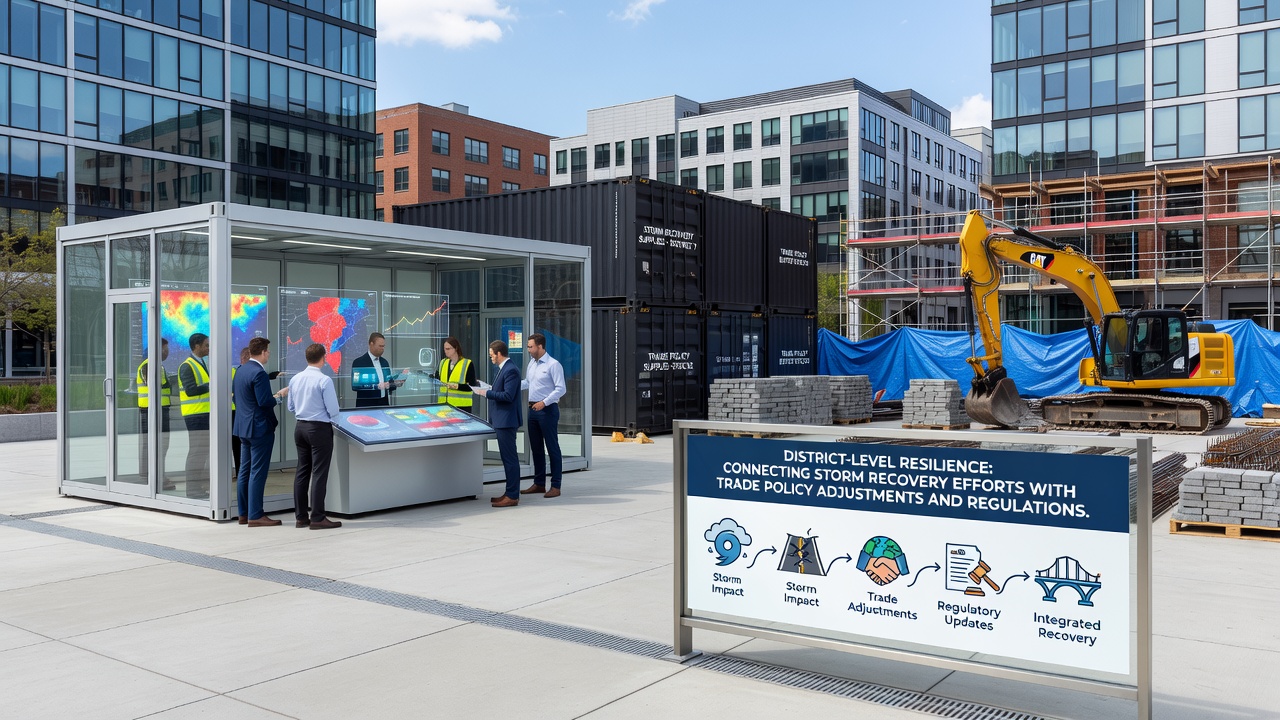
District leaders in the United States have responded by forming interagency working groups that include representatives from commerce departments and emergency management offices. These groups track regulatory shifts in real time and translate them into actionable procurement guidelines for recovery contractors. The approach has proven effective because it prevents situations where delayed import clearances halt construction progress on critical facilities such as schools and hospitals.
Regulatory Shifts Driving Coordinated Responses
Regulatory shifts in environmental and safety standards have also prompted districts to rethink how they connect recovery spending with trade mechanisms. Updated rules on resilient building materials, for instance, often favor products sourced from specific trade partners that meet new certification criteria. Research published by the Australian Bureau of Agricultural and Resource Economics and Sciences indicates that regions incorporating these certifications into their trade negotiations secured more consistent material flows during recovery periods following severe storms in 2025.
Districts have therefore developed checklists that link every major recovery contract to both the latest regulatory updates and the corresponding trade documentation. This practice reduces the risk of rework when standards change mid-project and ensures that imported goods meet all applicable requirements upon arrival.
Practical Examples of Integrated District Planning
Take one mid-Atlantic district that experienced repeated hurricane impacts: after the 2025 season, officials combined federal recovery grants with expedited trade clearance procedures for steel imports under a revised North American agreement. The result was a documented reduction in construction timelines because permits and tariff reviews moved forward in parallel rather than sequentially. Similar coordination appears in Canadian prairie districts recovering from 2026 wind events, where provincial regulators aligned crop insurance payouts with trade adjustments on equipment parts.
These cases demonstrate that district-level resilience grows when recovery teams maintain active communication channels with trade and regulatory bodies. The connections become especially valuable when multiple storms occur within a short window, because overlapping recovery demands can strain both domestic supply chains and international trade routes simultaneously.
Conclusion
District-level resilience now depends on the ability to weave storm recovery timelines together with ongoing trade policy adjustments and regulatory shifts. Data continues to show measurable improvements in recovery speed and cost control when these elements receive joint attention from the outset. As weather patterns and global trade conditions evolve, districts that maintain this integrated approach position themselves to handle future disruptions with greater efficiency and fewer compliance setbacks.